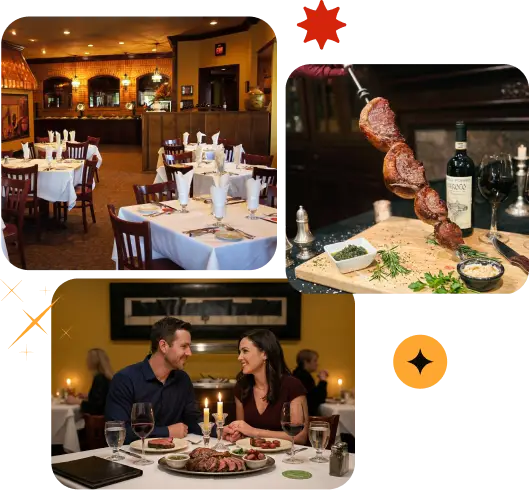
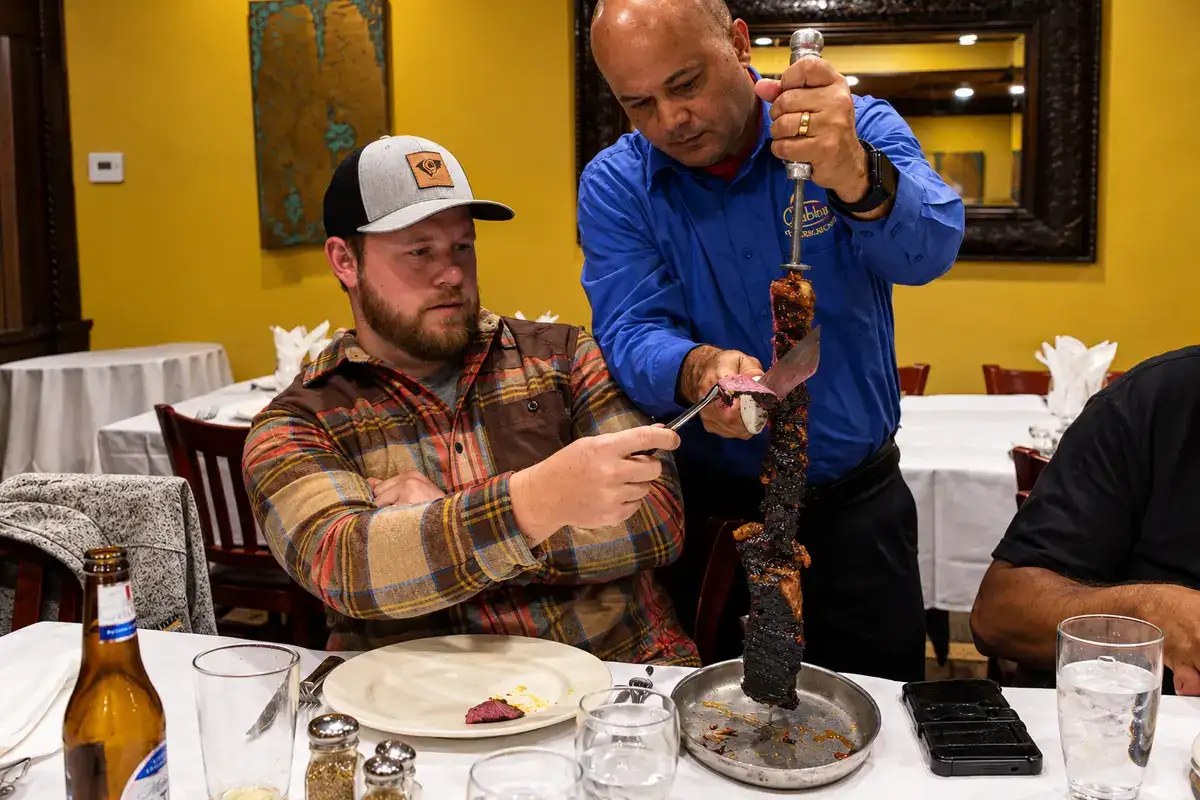
A gaucho carving picanha tableside at Leblon Churrascaria checks the crust along the edge of the cut before slicing, turning the skewer slightly so each guest gets a piece with that dark, salted exterior instead of the paler center. It’s a small habit, easy to miss, but it’s a good illustration of the question a lot of people are actually asking when they wonder what makes a great steakhouse. The answer usually has less to do with the size of the dining room or how many cuts appear on the menu, and more to do with whether the people cooking and serving the food pay attention to details like that one, consistently, every service.
Quick Facts — Cuisine: Brazilian rodizio – Full rodizio dinner: $49 – Salad bar only: $28 – Location: 106 S Holden Rd, Greensboro NC – Dinner hours: 4:30-9:30 PM, varies by day – Reservations: recommended, call ahead for parties of 10 or more
So What Actually Makes a Great Steakhouse?
A great steakhouse comes down to three things done well and consistently. The meat has to be sourced and cooked with care. The kitchen has to understand fire, not just heat. And the service has to feel attentive without being intrusive. Any one of these on its own isn’t enough. A bigger menu or a larger dining room doesn’t actually predict whether the meal in front of a guest will be good. What separates a memorable steakhouse from a forgettable one is when sourcing, fire, and service line up at the same time, on the same plate, night after night, not just on one particular visit.
How Much Does Meat Quality Really Matter?
Meat quality plays a bigger role in a steakhouse’s reputation than the price tag alone suggests. At Leblon, picanha is one of the signature cuts and a good example of why meat preparation matters. It’s cut from the top sirloin cap, with a thick layer of fat left on top. That fat isn’t trimmed off before cooking because it’s what bastes the meat as it roasts over open flame, and it’s also what creates the crust a careful gaucho checks for before slicing. A kitchen that trims that fat off to save time, or slices it too thin, is choosing convenience over flavor, and it shows in the first bite. A guest doesn’t need to know the technical reason to notice the difference between a rushed piece of picanha and one that was handled properly, they just know one tastes better.
What Role Does the Fire Actually Play?
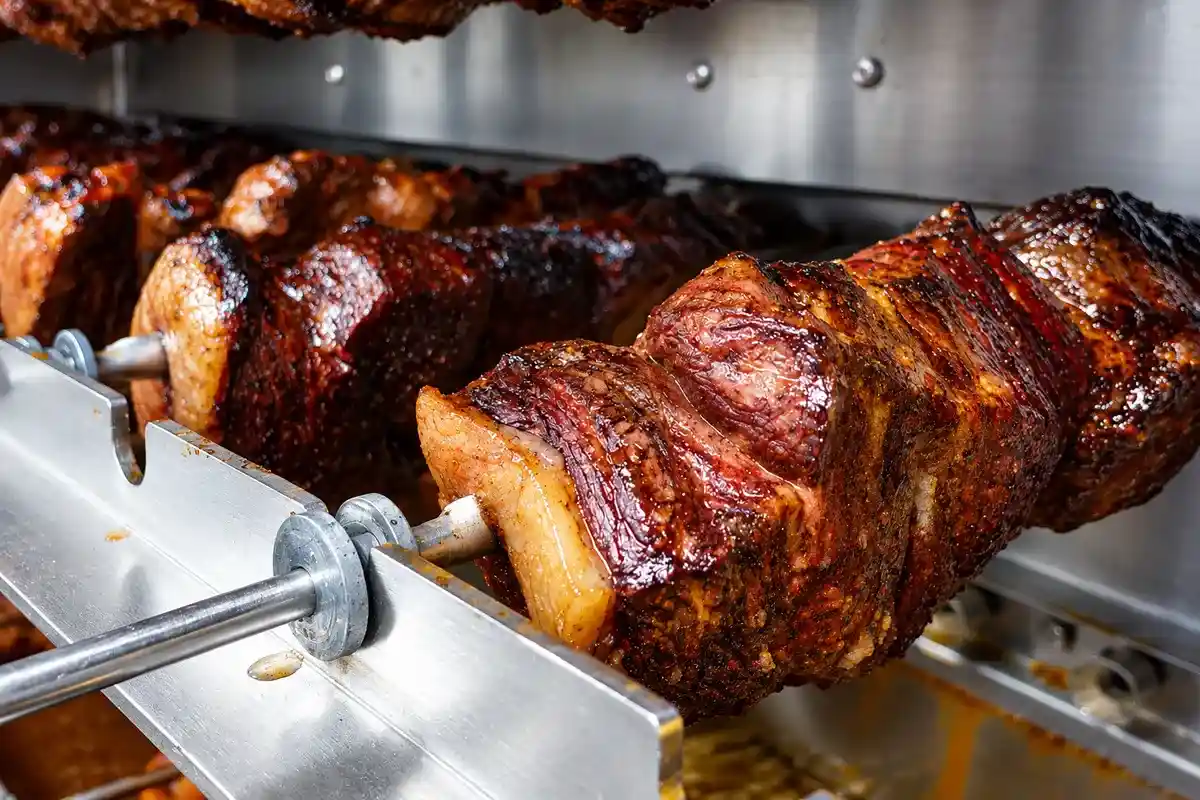
Fire roasted meat looks simple from the dining room, even when it isn’t. There’s something almost theatrical about watching a gaucho walk out from behind the flame with a full skewer, the outside blackened and glossy, steam still rising off it under the dining room lights. But churrasco style cooking is not the same as grilling in the backyard sense. The skewers rotate over open flame at a distance and angle that lets the outside develop a deep crust while the inside stays where it needs to be for that particular cut. Sausage and chicken cook fast and close to the flame. Thicker cuts like picanha need more distance and more time.
A kitchen that treats every skewer the same way, same distance, same timing, turns out meat that’s either burnt on the outside or underdone in the middle depending on the cut. Getting that balance right, skewer by skewer, is a skill that takes longer to learn than most people assume, and it’s the difference a guest can taste without ever seeing the fire itself.
Why Does Table Side Service Change the Experience?
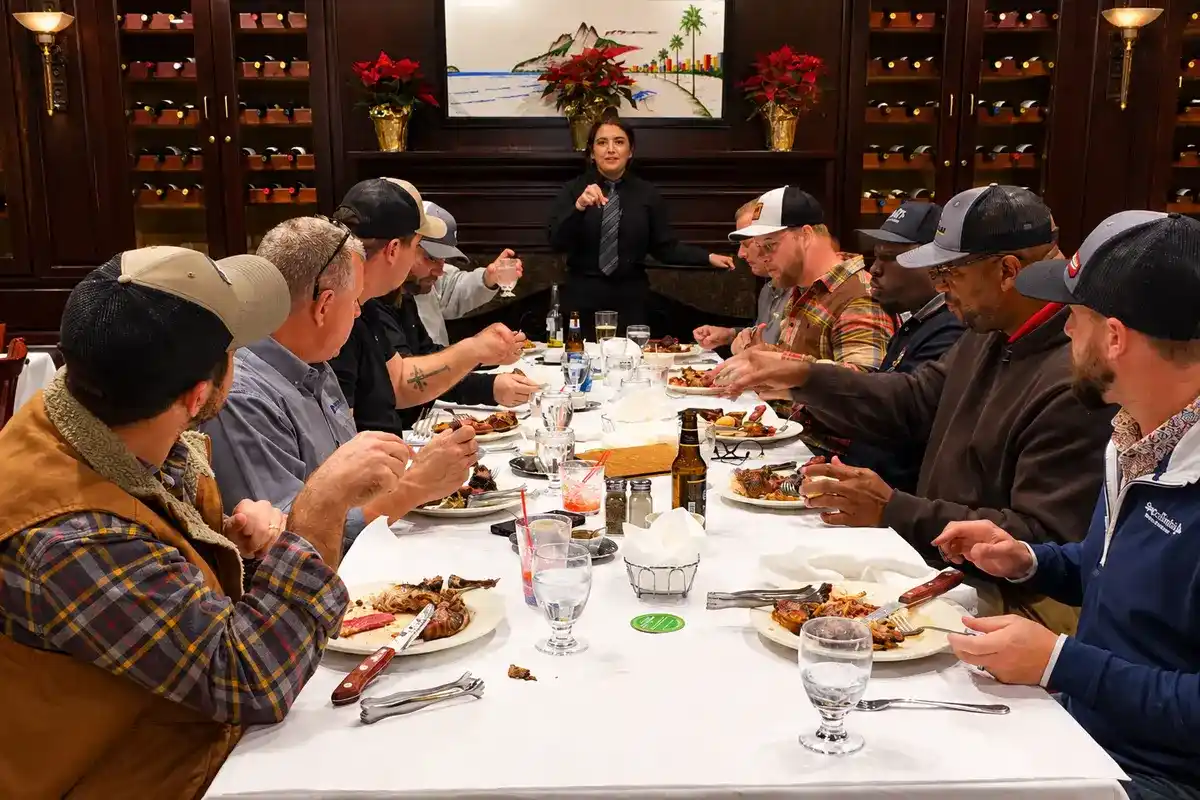
Traditional churrascaria dining puts more responsibility on the server than a typical restaurant does. At Leblon, the card system keeps this simple: green side up means keep bringing food, red side up means pause. It only works if the gauchos are actually reading the table and not just working a fixed route around the room. On a slow weeknight, that’s easy. On a packed Friday or Saturday with every table flipping their cards at different times, it takes real attention to keep the pace right so nobody feels rushed or forgotten. When it’s working well, a table barely notices the choreography behind it, the meal just feels unhurried, which is usually the point.
Rodizio Steakhouse vs Traditional American Steakhouse
| Rodizio Steakhouse (Leblon) | Traditional American Steakhouse | |
| How you order | Multiple cuts brought continuously until you stop them | One cut chosen from a menu |
| Pacing | Controlled by the guest with a table card | Set by the kitchen and server timing |
| Variety per visit | Many different cuts in one meal | Usually one main cut per guest |
| Side dishes | Included salad bar with Brazilian sides | Often ordered separately |
| Best for | Groups who want to sample widely | Diners who already know what they want |
Neither style is objectively better. Someone who already knows they want a bone in ribeye cooked medium rare is often happier at a traditional steakhouse. Someone who wants to try picanha, lamb, and grilled pineapple in the same sitting, without committing to just one, gets more out of rodizio, and that variety is part of what makes a first visit feel like an event rather than just another dinner out.
What Does the Price Actually Cover?
The full rodizio dinner at Leblon runs $49 per adult and covers the unlimited tableside meat service along with access to the salad bar, so nobody is choosing between the two. Kids 10 and under eat for $19. Drinks and dessert are billed separately, which matters for anyone planning around the Caipirinha bar or the wine list, since those additions add to the base price. Parties of five or more have an 18 percent gratuity added automatically, worth knowing ahead of a group booking for a celebration or a work dinner.
Not every guest wants a full meat forward meal, and that’s what the $28 salad bar only option is for. It gives someone who eats little or no meat a real seat at the table, without paying for a service they won’t use. For larger groups planning a celebration or a business dinner, the private room holds 30 to 36 guests and is worth asking about directly when making a reservation, since availability for that space is more limited than the regular dining room.
What Happens Behind the Scenes That Most Guests Never See?
At a rodizio restaurant, the kitchen and the dining room work on a rolling schedule, not a ticket system tied to individual orders. The kitchen has to estimate how many of each cut the current mix of tables is likely to want and keep skewers moving through the fire ahead of demand, without over preparing and wasting meat. That’s a different kind of pressure than a restaurant where each dish is fired only after it’s ordered, and it’s part of why rodizio kitchens run with a rhythm that’s noticeable if a table sits near the kitchen pass.
In a typical rodizio kitchen, skewers are prepared and organized by cut so gauchos can keep service moving without waiting for meat to be prepared between rounds. Different cuts require different cooking times, so the kitchen has to coordinate preparation with the pace of the dining room. That coordination creates a different rhythm from a traditional steakhouse, where individual dishes are generally prepared after they are ordered.
This system isn’t flawless. The tradeoff of feeding a whole dining room off a rolling schedule instead of individual tickets is that a less popular cut can sit a little longer near the fire during a rush than it would on a slower night. A good kitchen manages that gap so it’s barely noticeable, but it’s a real constraint of the format, not something rodizio restaurants avoid entirely.
Ready to Judge It for Yourself?
Meat quality, fire control, and attentive table side service are the three things that actually separate a great steakhouse from an average one, and Leblon Churrascaria builds its rodizio dinner around all three, in a room meant for evenings worth slowing down for, a birthday, an anniversary, or a Friday that deserves better than takeout.
The full rodizio dinner is $49 per adult, with a salad bar only option at $28 for anyone who wants a lighter visit. Reservations are recommended, especially on Friday and Saturday evenings, and parties of 10 or more should call ahead directly. The next step is simple: Reserve a table, watch how the gauchos handle the fire and the cards, and judge the meal on the same three things this article covers.
Frequently Asked Questions
Picanha is one of Leblon Churrascaria’s signature cuts, known for its fat cap and traditional Brazilian preparation.
Yes. The card system makes it easy to pace the meal, and the salad bar gives newcomers something familiar to start with while deciding which cuts to try first.
It generally runs longer than a single course dinner, since it’s built around multiple rounds instead of one plate. The exact length depends on how many rounds a table lets the gauchos bring and how much time is spent at the salad bar between them.
No. Guests are free to try a small piece of anything and pass on the rest. The green and red card system exists specifically so each table controls the pace and selection.
It works well for both. The table side format naturally slows the meal down, which some diners find better for conversation than a typical fast paced dinner service.
The distance and angle of the skewers from the flame are adjusted by cut, so thinner items cook quickly near the heat while thicker cuts like picanha cook slower at more distance to build a proper crust without overcooking the center.
The full rodizio dinner is $49 per adult, the salad bar only option is $28, and children 10 and under are $19. An 18 percent gratuity is added for parties of five or more.